
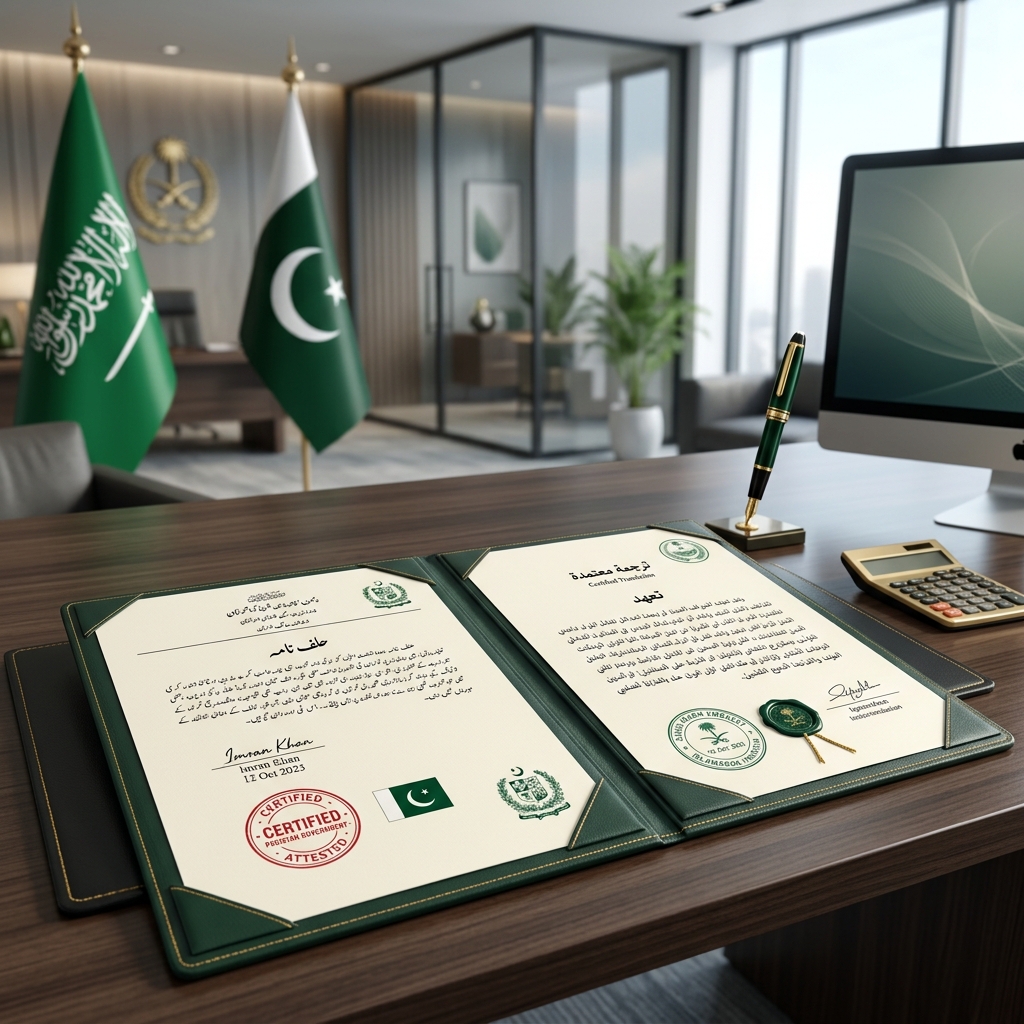
Applying for a Saudi visa, scholarship, university admission, or embassy process can quickly become stressful when document translation issues appear at the last moment. Many Pakistani applicants face rejection not because their original credentials are invalid, but because the Arabic translation format is incorrect, names do not match passports, or certification requirements are missing.
That is why securing a reliable Saudi embassy approved translation service in Pakistan is critical. A professionally translated and certified document reduces rejection risks, protects your application timeline, and ensures your paperwork meets strict Saudi Ministry standards.
In this guide, you will learn why Saudi translation rejections happen, what makes a translation embassy-compliant, and how professional Arabic translators help applicants avoid costly, time-consuming mistakes.
Why Saudi Embassy Translation Rejections Happen
Saudi authorities and universities pay close attention to translation accuracy. Even a minor oversight can result in months of delay or an immediate application rejection.
1. Small Spelling Mistakes Can Destroy Approval Chances
One incorrect letter in a name, address, or institution can create document inconsistencies. Embassy officials and university admissions offices compare translated documents directly with passports and official records.
Common translation errors include:
- Wrong spelling of applicant names
- Incorrect father's name translation
- Different date formatting (e.g., Hijri vs. Gregorian discrepancies)
- Typing errors in passport numbers or roll numbers
- Inconsistent university or school names
These issues may appear small, but they instantly raise verification concerns during automated and manual document checks.
2. Passport Name Mismatches Are a Major Issue
Your translated name must exactly match your passport spelling. A non-professional translator may treat spelling variations as minor, but Saudi documentation systems require exact consistency.
For example, spelling variations can cause rejections:
- Muhammad vs. Mohammad
- Abdul Rehman vs. Abdul Rahman
- Fatima vs. Fatimah
[!IMPORTANT] “A single spelling mistake on an educational degree or birth certificate translation can delay or reject your entire Saudi visa or scholarship application.”
3. Missing Stamp and Signature Problems
Many applicants mistakenly submit translations without professional validation. Unofficial translations are frequently rejected because they cannot be verified.
A Saudi embassy accepted translation must include:
- An official stamp of a registered agency
- The authorized signature of the translator
- A formal certification statement of accuracy
- Complete translator contact details
4. Incorrect Arabic Terminology and Legal Wording
Legal and academic Arabic requires subject-matter expertise. Uncertified translation services often use Google Translate, misinterpret legal terminology, translate academic degrees incorrectly, or use weak Arabic sentence structures. Saudi authorities expect professional, formal Arabic wording that follows official documentation standards.
What Makes a Translation Saudi Embassy Approved?
Not every translator understands specific Saudi document requirements. Embassy-compliant translation involves a mixture of accuracy, formatting, and official certification standards.
Certified Human Arabic Translators
Professional human translators understand legal Arabic terminology, academic document structure, Saudi documentation standards, and embassy formatting expectations. Human translation is essential for sensitive documents like:
- Degrees and academic transcripts
- Marriage certificates (Nikah Nama)
- Birth certificates
- Police character certificates
Proper Formatting and Official Certification
Certified Arabic translation in Pakistan should feature professional layout and formatting that mirrors the original document's design. This includes keeping tables, signatures, and board headers aligned so that evaluating officers can cross-examine the papers easily.
Accurate Academic and Legal Terminology
Saudi scholarship and university applications require precise academic wording. A generic translator may not understand specialized institutional requirements, such as:
- Degree classifications and titles (e.g., "Intermediate" vs. "High School")
- Credit hours and GPA scales
- Academic distinctions and honors
- Legal affidavit language
Documents Commonly Requiring Saudi Embassy Approved Translation
Whether you are traveling for work, study, or family relocation, certain documents must be translated into Arabic:
| Category | Common Documents | Link to Specific Service |
|---|---|---|
| Educational Documents | Matric & Intermediate Certificates, Bachelor's Degrees, Transcripts | Academic Translation |
| Legal & Family Documents | Nikah Nama (Marriage Certificate), Birth Certificate, NADRA FRC | Marriage Certificate / Birth Certificate |
| Visa & Security Papers | Police Clearance Certificates, Medical Reports, Affidavits | Police Certificate |
| Commercial Papers | Contracts, Business Invoices, Company Registration Certificates | Document Translation |
Why Google Translation Fails for Saudi Documents
Many rejected applications involve machine-translated documents. While machine translation is convenient, it cannot replace professional human translators for embassy submission.
- Machine Translation Cannot Handle Legal Context: Google Translate often produces literal, word-for-word conversions. This results in broken Arabic grammar, incorrect legal phrasing, and misleading meanings.
- Academic Terminology Errors Cause Rejection: Educational systems use specialized terminology. Machine translations fail to recognize specific degree classifications, department names, and distinctions, confusing Saudi university review boards.
- Fake or Unofficial Templates: Cheap, uncertified translation providers sometimes copy internet templates, use fake stamps, or provide low-quality files, which can damage applicant credibility permanently.
Fast Translation for Urgent Saudi Scholarship Deadlines
Many students contact translators when university portals are about to close. When you have a tight deadline, fast and certified delivery is everything.
University Portals Closing Soon
Saudi scholarship applicants face tight deadlines, urgent embassy appointments, and last-minute document requests. Missing translation deadlines can cost you an entire academic year.
Same-Day and Urgent Processing Options
Lisan.pk offers:
- Same-day translation for urgent cases
- 24-hour express delivery for standard academic sets
- Digital PDF delivery directly to your email or WhatsApp
- Nationwide courier delivery across Pakistan (Islamabad, Lahore, Karachi, Peshawar, Multan, and more)
How to Choose the Right Arabic Translation Service in Pakistan
- Check Certification and Experience: Ask whether the service provider is legally registered and offers certified translation with official stamps and signatures.
- Verify Arabic Language Expertise: Arabic translation is not basic bilingual typing. The agency must have years of experience dealing with Saudi scholarship programs and visa requirements.
- Avoid Cheap, Low-Quality Translators: Extremely cheap services usually lead to rejection risks, poor Arabic grammar, missing certifications, and delayed processing.
- Ask About Saudi-Specific Experience: Choose translators who are deeply familiar with Saudi embassy submissions, scholarship application portals, and MoFA rules.
Why Applicants Trust Lisan.pk for Saudi Arabic Translation
Lisan.pk provides professional Arabic translation services for applicants across Pakistan needing Saudi-compliant documentation. Unlike generic translation agencies, Lisan.pk focuses heavily on Arabic translation for Saudi-related requirements including scholarships, embassy submissions, university admissions, visa applications, and legal documentation.
[!TIP] Key Advantages of Lisan.pk:
- Certified, stamped, and signed translations accepted by Saudi Embassies and universities.
- 100% human translation by expert Arabic linguists.
- Fast 24-48 hour turnaround options to meet tight portal closing dates.
- Rigorous passport-spelling checks to ensure 100% match with identity records.
- Seamless online ordering and nationwide courier delivery.
Whether you are applying for a Saudi scholarship, a family visa, or university admission, professional translation reduces the risk of rejection and application delays.
External Resources for Applicants
- Official "Study in Saudi" Portal — Unified platform for international admissions.
- Saudi Ministry of Education — Official policies and guidelines.
- Saudi Embassy in Pakistan (MOFA Saudi) — Latest visa and attestation rules.
Need Certified Saudi-Compliant Arabic Translation?
Get your documents reviewed by professional Arabic translation experts before submission. Contact us for same-day processing or a free quote:
Get Your Stamped & Certified Translation on WhatsApp: +92-328-8155866
Request a Free Certified Translation Quote Online
Need Expert Help with Your Documents?
Our Saudi scholarship consultants are ready to assist you with certified translations and attestation requirements. Get a response in minutes.
Written by Lisan.pk Editorial Team
Expert consultant at Lisan.pk specializing in international document legalization and translation services.
Related Articles
Bachelor Scholarship Applications 2026: Complete Document Requirements Checklist
Are you applying for an undergraduate Saudi scholarship? Learn the exact document checklist, certified Arabic translation rules, and verification steps required before the September 16, 2026 portal opening.
TranslationMaster's Scholarship Documents Guide 2026 – Complete Preparation Checklist
Are you applying for a Master's or PhD scholarship in Saudi Arabia? Learn the complete graduate document checklist, research file formatting, and certified Arabic translation requirements for the 2026 cycle.
TranslationEnglish to Spanish Translation Services in Pakistan: Your Complete Guide to Certified Approval
Get expert English to Spanish translation services in Pakistan. Fast, embassy-approved certified translations in Lahore, Karachi, Islamabad, & more.