

Saudi scholarship deadlines are approaching fast, and many students are discovering too late that document translation is not something they can leave for the final days. With only 9 days remaining before the 21 May deadline, even a small mistake in academic documents can delay or weaken your application.
Students spend months preparing IELTS scores, transcripts, recommendation letters, and statements of purpose (SOP). But incomplete Arabic translations, inconsistent names, or poorly formatted files can still create major problems during submission.
This comprehensive guide explains which documents require Arabic translation, common rejection mistakes to avoid, and how you can prepare your scholarship files correctly before the portal closes.
Why Many Saudi Scholarship Applications Get Delayed at the Final Stage
A common problem among scholarship applicants is assuming English documents alone are enough. While some departments accept initial uploads in English, official Saudi scholarship platforms and universities usually request:
- Certified Arabic translations of all degrees and transcripts.
- Translated academic records with correct grading conversions.
- Properly formatted educational documents that match Saudi standards.
- Translated stamps, seals, and barcodes from previous attestations.
Official Saudi scholarship platforms and universities are actively processing international applications for the 2026 cycle, with several major programs closing on 21 May 2026.
For many students, the translation issue appears at the worst possible time:
- After uploading documents to the portal
- During final verification by the admissions committee
- While preparing embassy coursework or visa paperwork
- Minutes before the portal closure dates
That delay can become critical when deadlines are only days away.
[!IMPORTANT] Pull Quote: “Students often prepare their applications for months but underestimate how long document verification and translation can take.”
Only 9 Days Left: Why Students Should Not Delay Translation
Saudi scholarship deadlines move quickly. Some major Saudi university admissions for Fall 2026 already closed earlier this month, showing how little flexibility exists once portals shut down.
How Scholarship Deadlines Create Document Pressure
As the 21 May target approaches, students commonly face:
- Last-minute corrections requested by university reviewers.
- Incomplete scans that show cut-off stamps or signatures.
- Missing pages from multi-page transcripts.
- Urgent attestation requirements (such as MOFA or HEC stamps).
- Formatting problems that fail automated file validation.
Translation delays become even riskier when translators need revisions, names do not match passports, documents contain unofficial terminology, or low-quality scans must be redone from scratch.
Why Last-Minute Translation Requests Become Risky
Relying on cheap freelancers or automated online tools often creates:
- Incorrect department names (literal word-by-word translations).
- Inconsistent GPA terminology (failing to reflect Saudi equivalents).
- Untranslated university stamps (embassies and portals expect every stamp to be translated).
- Formatting errors that look unprofessional or incomplete.
These issues can make documents appear unprofessional or incomplete, resulting in immediate rejection.
Documents Usually Required in Arabic for Scholarship Applications
Different universities have different requirements, but students commonly need to secure certified academic document translation for the following:
1. Academic Documents
- Transcripts (Semester-wise or consolidated)
- Degrees and Diplomas
- Equivalency certificates (from HEC/IBCC)
- Research proposals and thesis summaries
2. Identity and Legal Documents
- Passport (personal details page)
- CNIC / National Identity Card
- Birth Certificate
3. Supporting Documents
- Recommendation letters from professors
- Statement of Purpose (SOP)
- Experience certificates
- Internship certificates
[!NOTE] If you are searching for:
- “Do I need Arabic translation for transcript?”
- “Which scholarship documents require translation?”
- “Can I submit English documents to Saudi universities?”
You should always verify university-specific requirements early, but having a professional Arabic translation for transcripts ready is the safest approach to prevent portal rejections.
Common Translation Mistakes That Can Affect Scholarship Approval
One of the biggest misconceptions is believing any translator can handle academic documents. Professional academic translation requires extreme consistency in terminology and formatting.
1. Incorrect Academic Terminology
Academic terms must be translated according to specific Saudi standards. Examples of mistakes include:
- Translating "Computer Science" or "Software Engineering" inconsistently across transcripts.
- Incorrect GPA wording that confuses the admissions board.
- Inaccurate thesis titles that alter the scientific meaning.
- Wrong faculty or department names.
2. Name Mismatches
Passport names, transcripts, and certificates must match exactly. Even small inconsistencies in spacing, initials, spelling, or surname order can create major verification issues.
3. Formatting and Stamp Translation Issues
Saudi universities often expect:
- Complete document translation (no untranslated margins).
- Translated seals/stamps/barcodes.
- Clean formatting mirroring the original document layout.
- Readable scans in professional PDF structure.
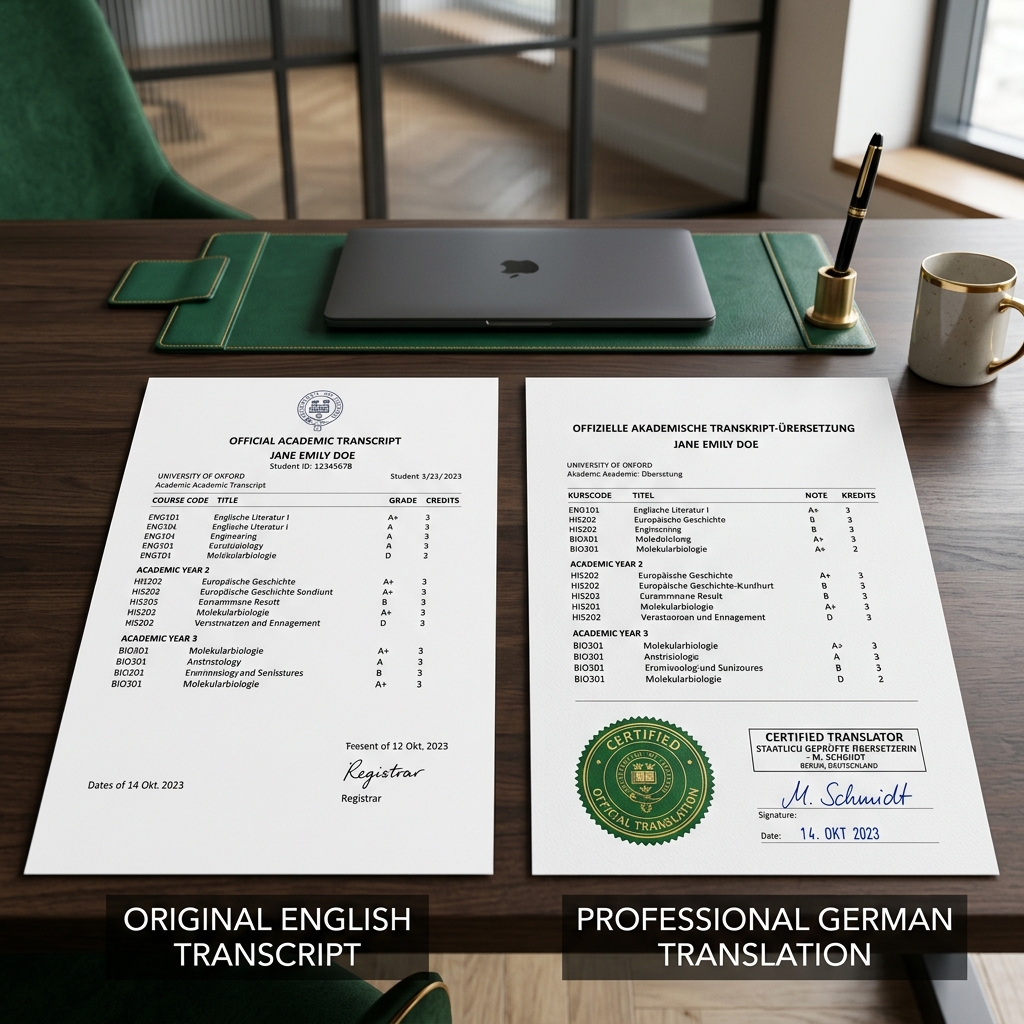
According to Saudi-certified translation guidance, properly formatted certified translations remain essential for official educational document processing.
What Universities Expect in a Professional Arabic Translation
Universities and scholarship offices generally expect:
- Accurate academic terminology
- Certified formatting with translator declarations
- Consistent names aligning with passport data
- Complete page translation (translating back pages and stamps)
- Clear document structure
Students are increasingly worried about fake or unaccepted translations because rejection risks are real. Online discussions around Saudi scholarship applications show repeated student concerns about document formatting and verification problems.
Professional Arabic academic translation should focus on accuracy, consistency, readability, and compliance with academic standards—not just literal word-by-row conversion.
Scholarship Document Preparation Tips Students Often Ignore
While translation quality matters, document preparation also heavily affects your application success. Follow these three key pillars:
1. PDF Naming Conventions
Use clear, professional file names. Avoid random scanner outputs.
- Good:
Passport-Ali.pdf,BSCS-Transcript.pdf,SOP-SaudiScholarship.pdf - Bad:
scan123.pdf,newfile2.pdf,doc-final-v3.pdf
2. Scan Quality
Low-quality scans can create unreadable stamps, blurred signatures, or cropped pages. Always scan in high-resolution (300 DPI) and ensure all four corners of the page are visible.
3. File Sequencing
Arrange your documents logically inside your application folders:
- Passport Details Page
- Degree Certificate
- Academic Transcript
- Recommendation Letters
- Statement of Purpose (SOP)
- Supporting / Experience Certificates
This makes verification easier for the admission officer.
How Students Can Get Documents Translated Online Before Deadline
Many students cannot visit physical offices because they are in different cities, busy preparing applications, managing university portals, or working under urgent deadlines.
Fortunately, online translation support for students allows you to:
- Send your document PDFs through WhatsApp.
- Receive highly accurate digital copies quickly.
- Process urgent academic translations completely remotely.
For students applying before the 21 May window, fast and reliable communication matters more than anything.
7 Common Reasons Scholarship Documents Get Rejected
According to recent application feedback, here are the top mistakes students make:
- Incomplete Translation of Stamps & Seals: Forgetting to translate back-page attestation stamps, barcodes, or background seals.
- Name Spelling Mismatches: Small spelling or spacing discrepancies between transcript names and your official passport.
- Inconsistent Academic Terminology: Machine-translating technical subjects, majors, or GPA detail grading scales.
- Low-Quality / Blurry Scans: Submitting illegible, cropped, or out-of-focus mobile phone photos instead of flatbed scans.
- Missing Pages / Incomplete Sets: Forgetting back pages of degrees or semesters in multi-page transcripts.
- Unofficial Translation without Stamps: Submitting uncertified translations lacking official registered translator seals and signatures.
- Poor Layout & Disorganized PDF Structure: Merging pages in the wrong order or submitting a confusing, disorganized file set.
[!TIP] Pro Tip: "Incorrect academic terminology and name mismatches are among the most common scholarship document issues. Always review your draft translation files side-by-side with your passport before final submission."
Processing Timeline for Saudi Scholarship Translation
With only 9 days remaining before the 21 May deadline, choosing the right service tier is vital to avoid missing your window.
| Service Type | Estimated Processing Time | Ideal For |
|---|---|---|
| Standard Translation | 2–3 Days | Early applicants with multiple supporting files |
| Urgent Translation | 24 Hours | Students submitting near-deadline transcripts & degrees |
| Same-Day Processing | Under 12 Hours | Critical final-day corrections for selected documents |
Don’t Let Translation Delays Ruin Months of Scholarship Preparation
Students spend months preparing scholarship applications, improving IELTS scores, collecting recommendations, and organizing academic records. Losing that opportunity because of incomplete or delayed translation is completely avoidable.
With Saudi scholarship deadlines closing on 21 May, now is the time to review your documents carefully, correct any formatting issues, and prepare professional Arabic translations before submission pressure becomes unmanageable.
Need Expert Help? Chat with a Certified Arabic Translator Now!
Our dedicated student support team is online to assist you with urgent translations, document formatting reviews, and Saudi portal requirements.
- WhatsApp Helpline: 0304-4296295
- Get a Fast Online Quote: Submit your document checklist via our Contact Form.
External Scholarship & Verification Resources
- Saudi Ministry of Education Scholarship Program Conditions — Official terms & documentation rules.
- King Abdulaziz University (KAU) Scholarship Details — Admission cycles and application instructions.
- Jazan University International Scholarships Announcement — Deadlines and criteria.
- KAUST Graduate Admission Timeline — Timelines and processing milestones.
About the Author
Lisan.pk is Pakistan’s premier professional Arabic and academic translation agency. We support students applying to Middle East universities and scholarship programs with verified translation workflows, official stamps, and rapid turnaround times tailored for deadline-sensitive admissions.
Need Expert Help with Your Documents?
Our Saudi scholarship consultants are ready to assist you with certified translations and attestation requirements. Get a response in minutes.
Written by Lisan.pk Editorial Team
Expert consultant at Lisan.pk specializing in international document legalization and translation services.
Related Articles
English to Spanish Translation Services in Pakistan: Your Complete Guide to Certified Approval
Get expert English to Spanish translation services in Pakistan. Fast, embassy-approved certified translations in Lahore, Karachi, Islamabad, & more.
TranslationArabic Translation Services in Pakistan | 100% Embassy Approved
Need certified Arabic translation services in Pakistan? Get 100% MOFA & Saudi/UAE Embassy accepted English to Arabic document translation via Lisan.pk.
TranslationUSCIS Certified Translation Services: Complete Guide for Immigration Applications
A complete guide to USCIS certified translation services, explaining 8 CFR 103.2(b)(3) requirements, common mistakes, costs, and how to choose a reliable provider for your immigration applications.