
Most people searching for the “best translation services in Pakistan” are not actually searching for a literal word-for-word translation.
They are searching for certainty.
They want to know:
- Which translation company won’t get their documents rejected?
- Which translator actually understands complex embassy requirements?
- Who responds quickly and reliably on WhatsApp?
- Who provides real certified translation instead of fake stamps?
- Which service can handle Arabic and legal terminology properly?
At Lisan.pk, we work with users facing urgent embassy deadlines, scholarship pressure, immigration requirements, legal documentation, and Saudi visa processing every day.
We understand that the fear behind this industry is real. A single spelling mistake, formatting issue, or missing certification seal can delay:
- Visas and relocation schedules
- Fully funded international scholarships
- Hard-to-get embassy appointments
- MOFA (Ministry of Foreign Affairs) processing
- University admissions checks
That is why trust, authority, and accuracy matter far more than price alone.
“Users searching for the ‘best translation services’ are really searching for trust and acceptance certainty.”
The global translation industry is also changing rapidly. According to a 2025 localization industry report, machine-assisted workflows now account for 70% of translations globally, while AI translation usage surged by 533% in 2024.
But despite this rapid AI growth, official documentation still depends heavily on human review because authorities care deeply about compliance, formatting, and legal accuracy.
That is exactly where professional certified translation services still matter most.
What Makes a Translation Service “Trusted” in Pakistan?
Pakistan’s translation market has a major trust problem. Many local agencies claim:
- Certified translation
- Embassy-approved translation
- Notarized translation
- Legal translation
But users often cannot verify:
- Translator qualifications (whether they are certified or just amateurs)
- Stamp authenticity (whether the stamp carries official weight)
- Embassy compliance (whether formatting matches current rules)
- Legal formatting standards (mirroring the original document)
This creates massive anxiety for applicants already under tight deadline pressure.
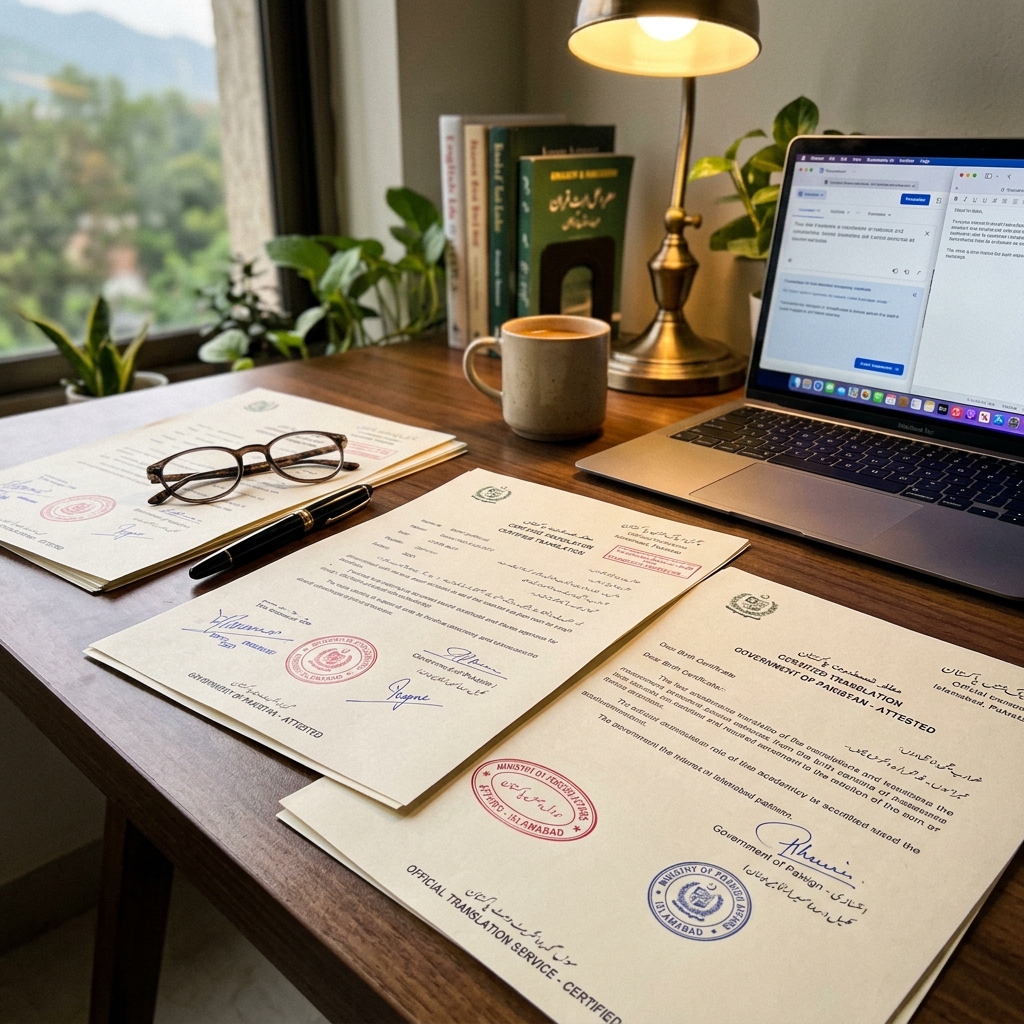
Why Users Fear Embassy Rejection
Embassy rejection is the biggest emotional trigger in this industry. Users are terrified their documents may be rejected by:
- The Saudi Embassy in Islamabad or Karachi
- Ministry of Foreign Affairs (MOFA) offices
- International universities and registrar systems
- Immigration authorities (CIC, UKVI, etc.)
- Academic evaluators like WES / ICAS
- Global scholarship portals
Recent certified translation rejection studies show that the most common refusal reasons include:
- Missing certification statements (a formal declaration of accuracy)
- Unrecognized translators without proper credentials
- Incomplete translation (leaving out seals, signatures, or back pages)
- Missing signatures and stamps on critical margins
That fear is completely justified.
The Problem With Fake Certified Translators
One of the biggest complaints in Pakistan is fake “certified” translation claims. Some unreliable providers:
- Use copied, one-size-fits-all templates
- Apply unofficial, unregistered stamps bought from local stamp makers
- Rely entirely on unchecked machine translation (Google Translate)
- Outsource sensitive work to unqualified freelancers
At Lisan.pk, we focus strictly on:
- Professional human translators with decades of document-specific experience
- Embassy-compliant formatting mirroring the layout of the original document
- Accurate legal terminology mapping technical legal vocabulary perfectly
- Certified review processes involving two layers of proofreading
Because official translation is about acceptance — not just language conversion.
Why Human Translation Still Matters in 2026
AI translation tools are improving rapidly, but official document translation still has major risks.
A recent translation industry analysis found that AI systems still struggle heavily with:
- Legal nuance: Legal phrases have specific "functional equivalents" that direct translation tools mangle.
- Cultural context: Certain academic titles or government department names must follow formal conventions.
- Formal terminology: AI cannot verify whether a specific grading scale maps correctly.
- Conversational continuity: Formatting structures like stamps and handwritten text are often ignored by AI.
Even The Guardian recently reported that many professional translators believe human expertise remains critical because AI still fails in nuanced legal and contextual interpretation. For embassy and legal documentation, that human difference is the line between acceptance and rejection.
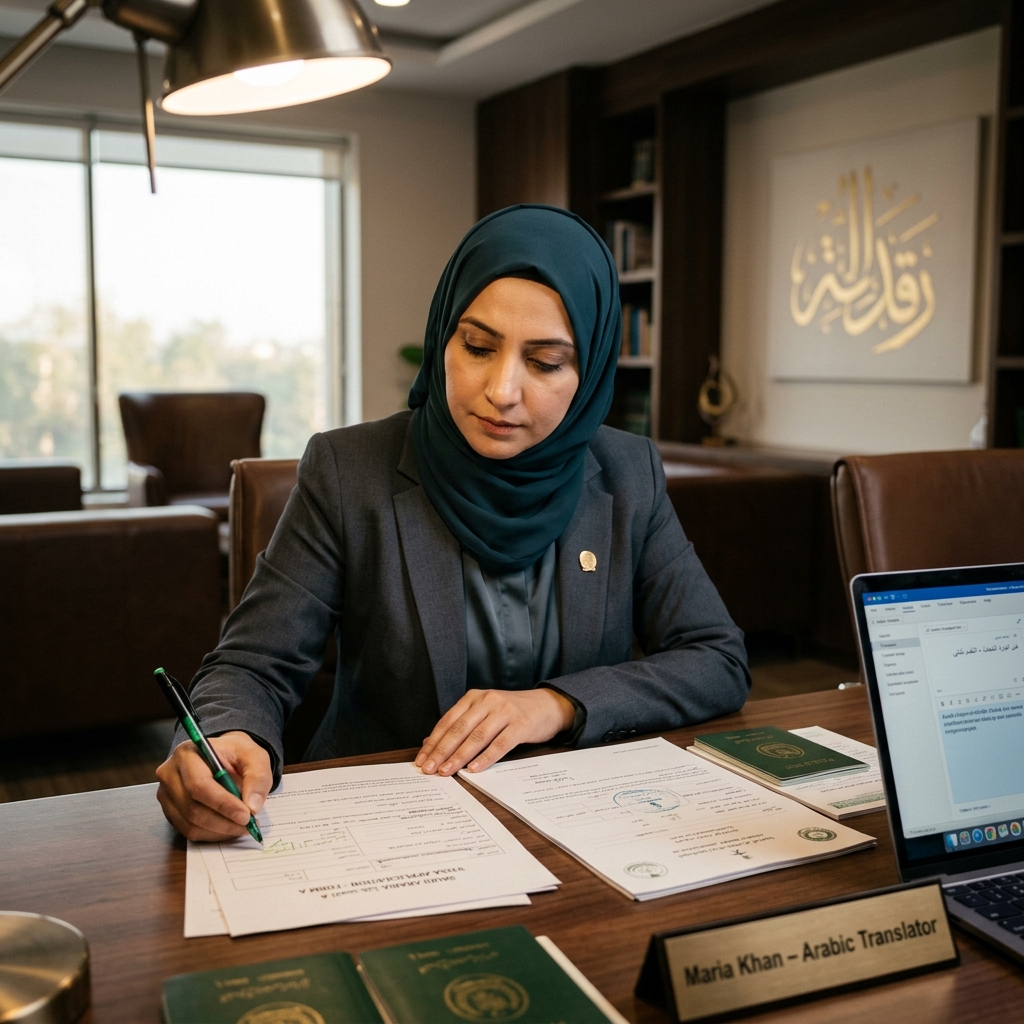
Certified vs Notarized vs Attested Translation — What’s the Difference?
This is one of the most misunderstood areas in Pakistan. Knowing the difference protects you from ordering the wrong document set.
Certified Translation
Certified translation is a translation accompanied by a formal, signed, and stamped statement from the translator or translation agency. It declares that the translated text is a true and accurate representation of the original. This is commonly required for embassies, universities, immigration, and scholarships.
Notarized Translation
Notarization involves a separate legal verification procedure through an authorized Notary Public. The Notary Public verifies the identity of the translator and signs/seals the translation to witness the signature. Some foreign authorities specifically request notarized translation for legal or international use.
MOFA & Embassy Attestation
Attestation and legalization are completely separate processes connected to document verification. The original document must first be attested by local bodies (such as HEC or IBCC), then both original and translated copies are attested by the Ministry of Foreign Affairs (MOFA) and finally by the target embassy itself.
At Lisan.pk, we guide applicants through these complex documentation workflows for Saudi-related processing and embassy-sensitive submissions.
Why Poor Translation Causes Visa & Embassy Rejection
Most rejected translations fail because of small technical details that uncertified agencies miss.
“Most translation rejections happen because of formal issues — not language alone.”
Arabic Terminology Mistakes
Arabic translation is one of the highest-risk categories in Pakistan, especially for Saudi visas, fully funded scholarships, legal paperwork, and Iqama processing. Literal machine translation often produces incorrect legal terminology which triggers immediate rejection by Gulf embassies.
Passport Spelling Mismatch
Even a one-letter spelling inconsistency between your passport, translated documents, and visa paperwork can trigger objections or cancel your visa slot. We cross-verify all names with your passport before printing.
Missing Stamp or Signature
Authorities will instantly reject papers missing formal certification wording, translator signature, or the registered agency stamp. These are among the most common certified translation refusal reasons globally.
Formatting Inconsistencies
Reviewing officers at embassies are busy. If your translation has incomplete pages, chaotic formatting, or untranslated seals, they will flag it immediately. Formatting consistency is a key trust indicator.
Which Documents Commonly Need Certified Translation in Pakistan?
At Lisan.pk, we regularly handle translations across several key categories:
Educational Documents
- Degrees and academic transcripts (HEC-recognized)
- Diplomas and marksheets
- IBCC equivalence certificates
- Scholarship paperwork and recommendation letters
Saudi scholarship demand has increased significantly as Saudi Arabia continues expanding international education initiatives under Saudi Vision 2030. See our complete guide on HEC Attested Degree Arabic Translation Pakistan.
Visa & Immigration Documents
- Passports and B-Forms
- Police character certificates
- Employment and reference letters
- Bank statements and sponsorship letters
Legal & Court Documents
- Affidavits of unmarried status or identity
- Power of Attorney (Wakalatnama)
- Contracts, court records, and agreements
Business & Commercial Documents
- Company registration certificates (SEC / Chamber)
- Commercial contracts and invoices
- Import/export documents and tax papers
Why Arabic Translation Is the Biggest Challenge in Pakistan
Arabic translation has become one of the fastest-growing translation categories in Pakistan.
Why? Because Saudi-related processing continues expanding rapidly across employment, education, tourism, business, and religious travel sectors. For example, Saudi Arabia recorded 16.92 million Umrah pilgrims from outside the Kingdom in 2024, significantly exceeding targets under Vision 2030.
This massive growth has spiked the demand for:
- Saudi Embassy Approved Translation Pakistan
- MOFA Attested Arabic Translation Pakistan
- Saudi Embassy Rejection Translation Fix Pakistan
- Certified Arabic Translation Services
Problems With Machine Translation
While Google Translate is fast, it fails to understand Arabic legal grammar, resulting in broken, literal sentences that carry zero legal standing.
Legal Arabic Terminology Risks
Wording mistakes in commercial or marital documents can create embassy objections, legal ambiguity, and severe processing delays. That is why Lisan.pk utilizes specialized Saudi-focused Arabic translation workflows and embassy-sensitive terminology.
Online Translation Services in Pakistan — What Users Expect Today
Modern users no longer want to deal with unnecessary office visits, physical paperwork delays, or unclear phone communication. They expect a streamlined, 100% digital experience:
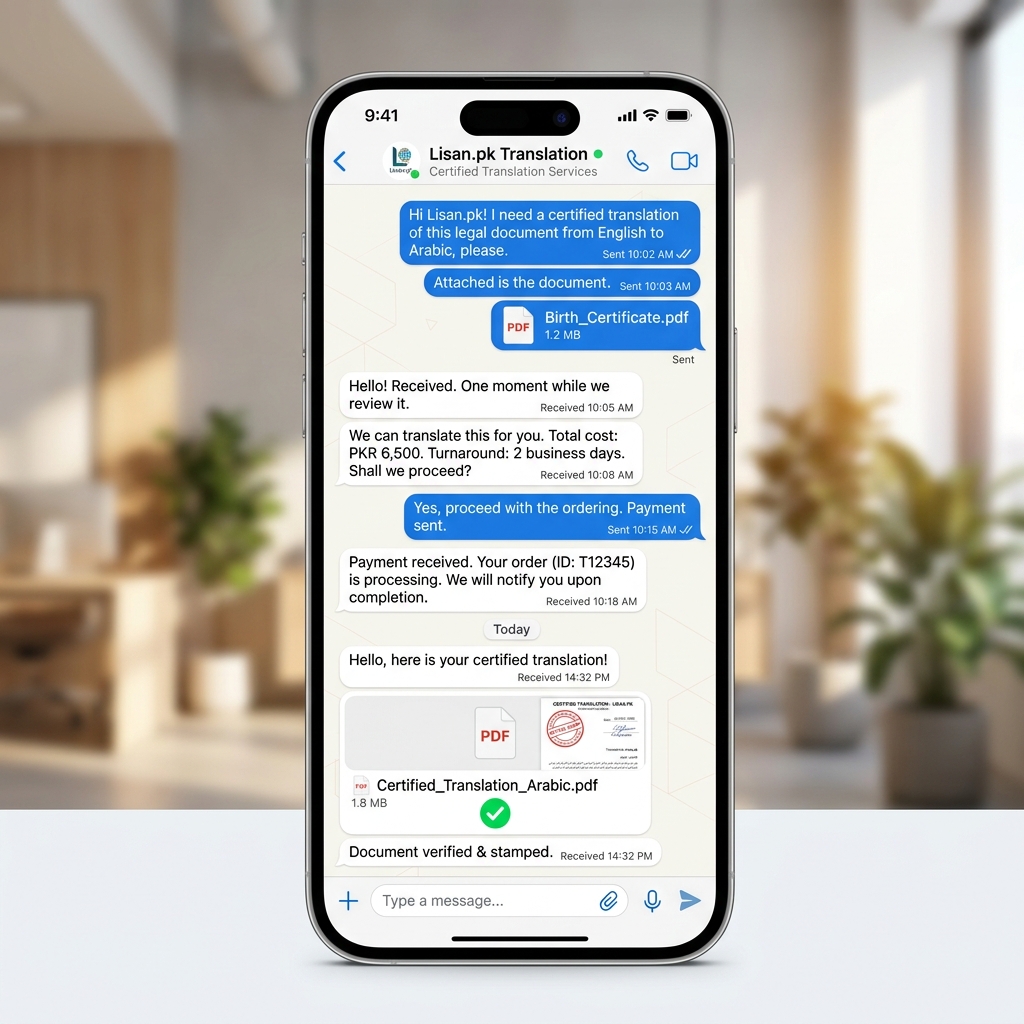
WhatsApp Ordering
At Lisan.pk, users can submit clear documents directly through WhatsApp for instant review. 👉 Chat on WhatsApp to Get Started
Same-Day & Urgent Translation
Urgency is a major factor because most users contact translation agencies close to embassy appointments, scholarship deadlines, or visa processing dates. We provide urgent same-day handling options depending on document category and workload.
Nationwide Courier Delivery
We serve clients nationwide, delivering certified physical copies to:
- Lahore, Islamabad, and Rawalpindi
- Karachi, Faisalabad, and Multan
- Peshawar, Sialkot, and beyond
Privacy & Confidentiality
Document translation involves highly sensitive papers, including passports, bank records, family certificates, and legal files. Lisan.pk guarantees absolute confidentiality and secure data deletion after processing.
Why Clients Choose Lisan.pk
At Lisan.pk, our focus is not generic word substitution. We solve the real-world bureaucratic hurdles you face:
- Embassy-Focused Translation: We understand formatting concerns, document acceptance risks, and exact certification expectations.
- Human Professional Translators: We prioritize human-reviewed, expert-led professional translation over raw machine output.
- Transparent Pricing: No hidden fees, no last-minute surprises. We confirm costs upfront.
- Fast Communication: Quick WhatsApp support alone solves the biggest complaint users have with traditional translation offices in Pakistan.
📞 Speak Directly With an Expert Translator: 03288155866
Frequently Asked Questions
What is the best translation service in Pakistan?
The best translation service is one that provides accurate, certified, embassy-compliant translation with professional communication, stamp authenticity, and fast support.
Do embassies require certified translation?
Yes. Many embassies and universities require certified translation for official documentation.
What causes translation rejection?
Common reasons include spelling mismatches, missing stamps or signatures, incomplete translation, unofficial translators, and formatting errors.
Does Lisan.pk provide online translation services?
Yes. Documents can be submitted online through WhatsApp from anywhere in Pakistan.
Does Lisan.pk provide Arabic translation?
Yes. We provide Arabic translation for visas, scholarships, legal documents, business paperwork, and embassy submissions.
Final Thoughts
The "best translation services in Pakistan" are not defined by flashy claims. Users care about document acceptance, embassy compliance, fast communication, real human translators, confidentiality, and accurate Arabic terminology.
At Lisan.pk, we focus on solving those real problems professionally for applicants, students, businesses, and legal clients across Pakistan.
Whether you need:
- Certified translation
- Saudi visa Arabic translation
- Embassy-compliant documents
- Scholarship translation
- Legal translation
- Urgent online translation services
Our team is ready to help.
👉 Contact Lisan.pk on WhatsApp
About the Author
The Lisan.pk Editorial Team specializes in certified Arabic translation, embassy-compliant documentation, educational translation, legal translation, and Saudi-focused document workflows in Pakistan. Our team regularly assists students, visa applicants, businesses, and legal clients requiring professional certified translation services.
External Resources & Authority References
- Higher Education Commission Pakistan
- Saudi Ministry of Foreign Affairs
- Saudi Vision 2030 Official Portal
Internal Guides & Quick Links
Need Expert Help with Your Documents?
Our Saudi scholarship consultants are ready to assist you with certified translations and attestation requirements. Get a response in minutes.
Written by Lisan.pk Editorial Team
Expert consultant at Lisan.pk specializing in international document legalization and translation services.
Related Articles
Bachelor Scholarship Applications 2026: Complete Document Requirements Checklist
Are you applying for an undergraduate Saudi scholarship? Learn the exact document checklist, certified Arabic translation rules, and verification steps required before the September 16, 2026 portal opening.
TranslationMaster's Scholarship Documents Guide 2026 – Complete Preparation Checklist
Are you applying for a Master's or PhD scholarship in Saudi Arabia? Learn the complete graduate document checklist, research file formatting, and certified Arabic translation requirements for the 2026 cycle.
TranslationEnglish to Spanish Translation Services in Pakistan: Your Complete Guide to Certified Approval
Get expert English to Spanish translation services in Pakistan. Fast, embassy-approved certified translations in Lahore, Karachi, Islamabad, & more.