
Urdu to English translation is one of the most requested document services in Pakistan because thousands of people apply every year for visas, immigration, scholarships, university admissions, overseas jobs, and embassy processing.
But most users are not simply searching for translation. They are searching for certainty.
They want to know:
- Will the English translation be accepted?
- Will the embassy reject my documents?
- Are the names translated correctly?
- Does the translation need certification?
- Will formatting and stamps remain accurate?
At Lisan.pk, we provide certified Urdu to English translation services in Pakistan for legal, immigration, embassy, academic, and official documentation with professional formatting and nationwide support.
Why Urdu to English Translation Requires Absolute Accuracy
Urdu legal and official documents often contain complex wording, handwritten text, stamps, religious terminology, and formatting that cannot be translated casually. One small mistake can create serious problems during official submission.
According to official University of Westminster Translation Guidelines, official translations for visa and immigration purposes must include certified translator details, signatures, accurate formatting, and complete translation coverage.
One Small Mistake Can Cause Rejection
An incorrect translation may lead to:
- Visa delays
- Embassy rejection
- University verification issues
- Legal inconsistencies
- Immigration complications
This is especially sensitive for high-importance documents like:
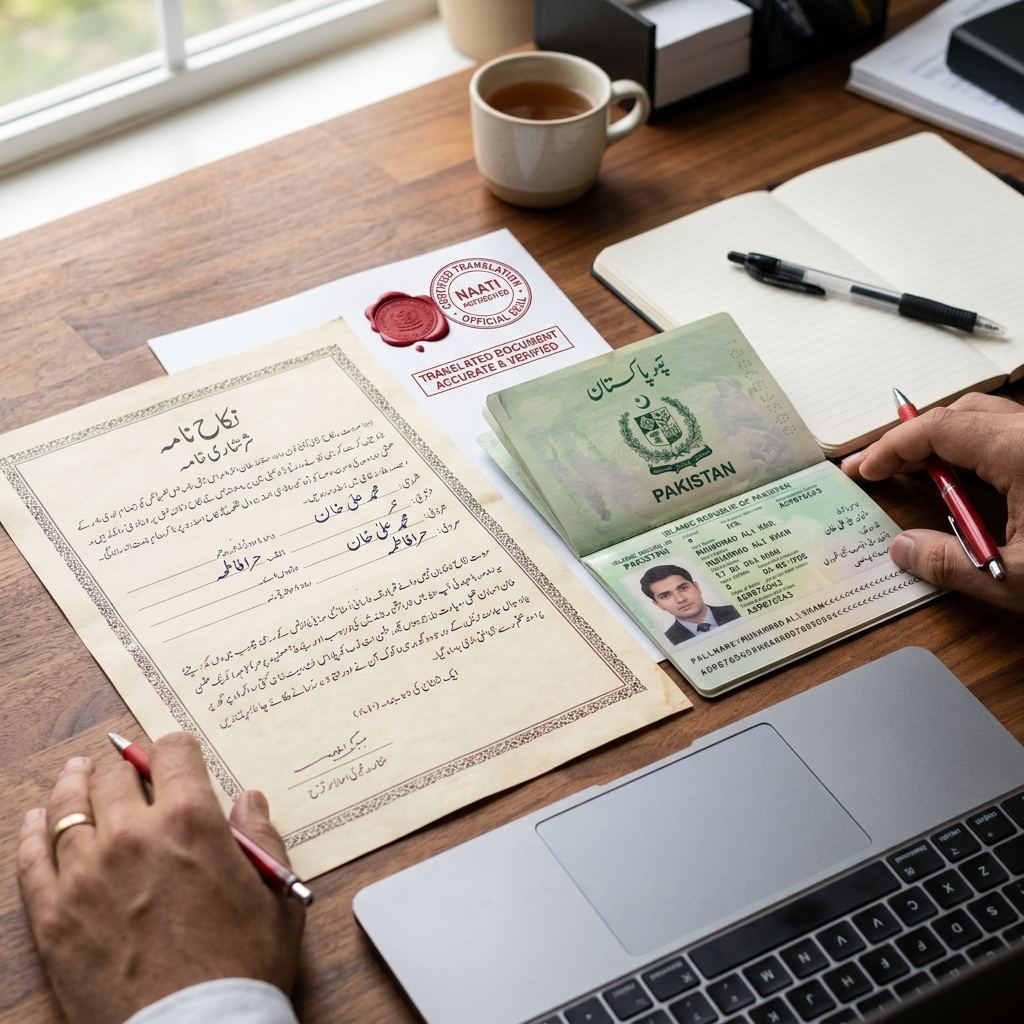
- Nikah Nama (Marriage Contract)
- Birth Certificates and B-Forms
- Police Character Certificates
- NADRA Records
- Court Papers and Affidavits
Users often discover translation mistakes only after submission problems or costly rejections begin.
Why Legal Urdu Is Extremely Difficult to Translate
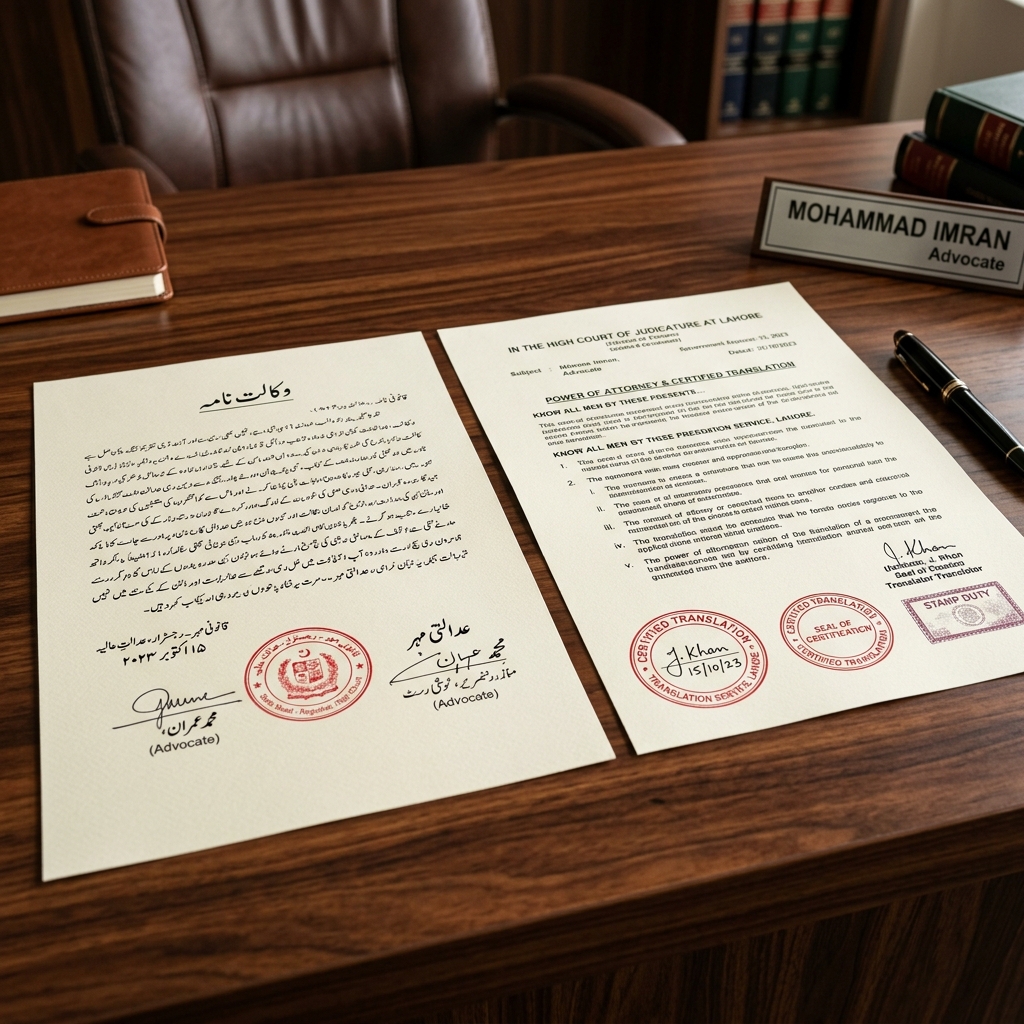
Urdu legal and government documents are not written in conversational language. Many of them include:
- Old-style legal Urdu and Persianized structures
- Handwritten notes in traditional cursive (Shekasteh/Nasta'liq)
- Religious phrases and cultural references
- Government terminology unique to Pakistani administrative frameworks
- Complex sentence structures with nested legal clauses
A 2026 report on translation expertise by Le Monde highlighted that human translators remain absolutely essential because professional translation requires deep contextual understanding and legal interpretation beyond literal word-for-word machine conversion.
This is why professional human translation is non-negotiable for official documentation.
“Users searching for Urdu to English translation are actually searching for acceptance, compliance, and trust.”
Which Documents Commonly Require Urdu to English Translation?
Different users require document translation depending on their specific immigration or academic pathway.
1. NADRA and Family Documents
Common family-status records include:
- Birth Certificates (NADRA Computerized & manual municipal versions)
- Marriage Certificates and Nikah Nama
- Family Registration Certificates (FRC)
- Divorce Certificates (Talaq Nama)
These are frequently required for spouse visas, family relocation, and registry applications with Western embassies.
2. Visa and Immigration Paperwork
Immigration-related documentation includes:
- Police Character Certificates
- Passport-related documents and travel records
- Affidavits (unmarried status, financial support)
- Identity records and court affidavits
According to the official UKVI Translation Requirements Guide, all non-English documents submitted for UK visa applications must be accompanied by a fully certified and verifiable English translation matching strict verification criteria.
3. Educational Documents
Students planning study-abroad pathways often require:
- Degree translation (Bachelor, Master, PhD)
- Transcript translation (Mark sheets and board results)
- Recommendation letters and study plans
- HEC and BISE verification paperwork
This is especially common for UK university admissions, European admissions, and US WES credential evaluation services.
4. Legal and Court Documents
Legal translation requires maximum precision. Examples include:
- Court judgments and decrees
- Property papers (Registry, Inteqal, Fard)
- Power of attorney (General and special)
- Legal notices and agreements
A single terminology error on a property or legal document can result in court verification failures or severe legal confusion.
Common Problems in Urdu to English Translation in Pakistan
Pakistan's translation market still suffers from significant quality and reliability inconsistencies.
Name Transliteration Mistakes
This is one of the single biggest hidden problems. Urdu names often have multiple English spelling variations:
- Muhammad vs. Mohammad
- Abdul Rehman vs. Abdul Rahman
- Ayesha vs. Aisha
- Zahid vs. Zaheed
If there is a spelling mismatch between your passport and your translated documents, embassies or portals like WES can flag your application for identity verification, delaying your visa or evaluation for months.
Incorrect Legal Wording
Automated translation tools often struggle with and mistranslate:
- Specific legal phrases (e.g., Mahr Moajjal and Mahr Muajjal on a Nikah Nama)
- Cultural and religious wording
- Local government terminology
- Official context and seals
A 2026 industry analysis by The Guardian emphasized that human judgment remains indispensable for nuanced and legally sensitive translation work to prevent errors that raw AI cannot detect.
Missing Certification and Formatting
Many translations get rejected because they lack:
- A formal Certification Statement declaring the translator's accuracy and competence.
- The registered translator's signature and contact details.
- An official registered stamp of the authorized agency.
- Layout preservation mirroring the original document's structure.
Many cheap, unregistered local translation stalls ignore layout and certification guidelines completely.
Machine-Translated Risks
Some low-quality providers copy and paste Urdu text into automated machine translators without human review. This leads to broken grammar, incorrect legal terms, lost formatting, and mistranslated names. For official submissions, this is a massive risk.
What Makes a Certified Translation Acceptable Internationally?
Many users are confused about what "certified translation" actually means under international law.
1. Certification Statement
A valid certified translation must include a formal declaration stating:
- That the translation is a true and accurate rendering of the original document.
- The translator's full name, credentials, and contact information.
- The date of translation and the company's registration details.
2. Official Stamp and Signature
International portals and embassies expect a hand-signed signature from the certified translator along with the official, registered stamp of the translation agency on every single page.
3. Formatting Preservation
A high-quality certified translation should preserve the complete layout of the original document, including:
- Tables, grids, and columns
- Stamps, seals, and signatures
- Side notes, margins, and footnotes
- Handwritten notes or scribbles
Formatting quality directly affects the visual trust and credibility of your document in front of embassy reviewers.

Why Immigration and Embassy Applications Get Rejected in Pakistan
Most users are deeply afraid of rejection. This anxiety is completely justified because single mistakes can destroy months of visa and scholarship planning.
Passport Spelling Mismatches
Names must match exactly across your Passport, Visa application, Educational documents, and Supporting paperwork. We cross-verify all translated spelling with your passport.
Incomplete Translations
Embassy reviewers look at the entire document. If a translation skips seals, stamps, backing pages, or margin notations, the document can be rejected as incomplete.
Missing Seals or Handwritten Text
Traditional Urdu documents often carry old municipal seals or handwritten side notes in the borders. Certified translations must account for and transcribe these sections fully.
Non-Professional Translators
Submitting translations done by yourself, family members, or non-certified translators is a quick way to get your visa application rejected. UK and Western visa guidelines strongly prefer professional, verified, and stamped certified translations.
How Lisan.pk Handles Urdu to English Translation Professionally
At Lisan.pk, we built our Urdu translation workflow to explicitly address the real quality, speed, and trust pain points faced by visa and scholarship applicants.
We understand that you are not simply translating a document. You are protecting:
- Visa timelines and flight itineraries
- Immigration applications and family relocation
- Scholarship deadlines and university admissions
- Legal validity and compliance standards
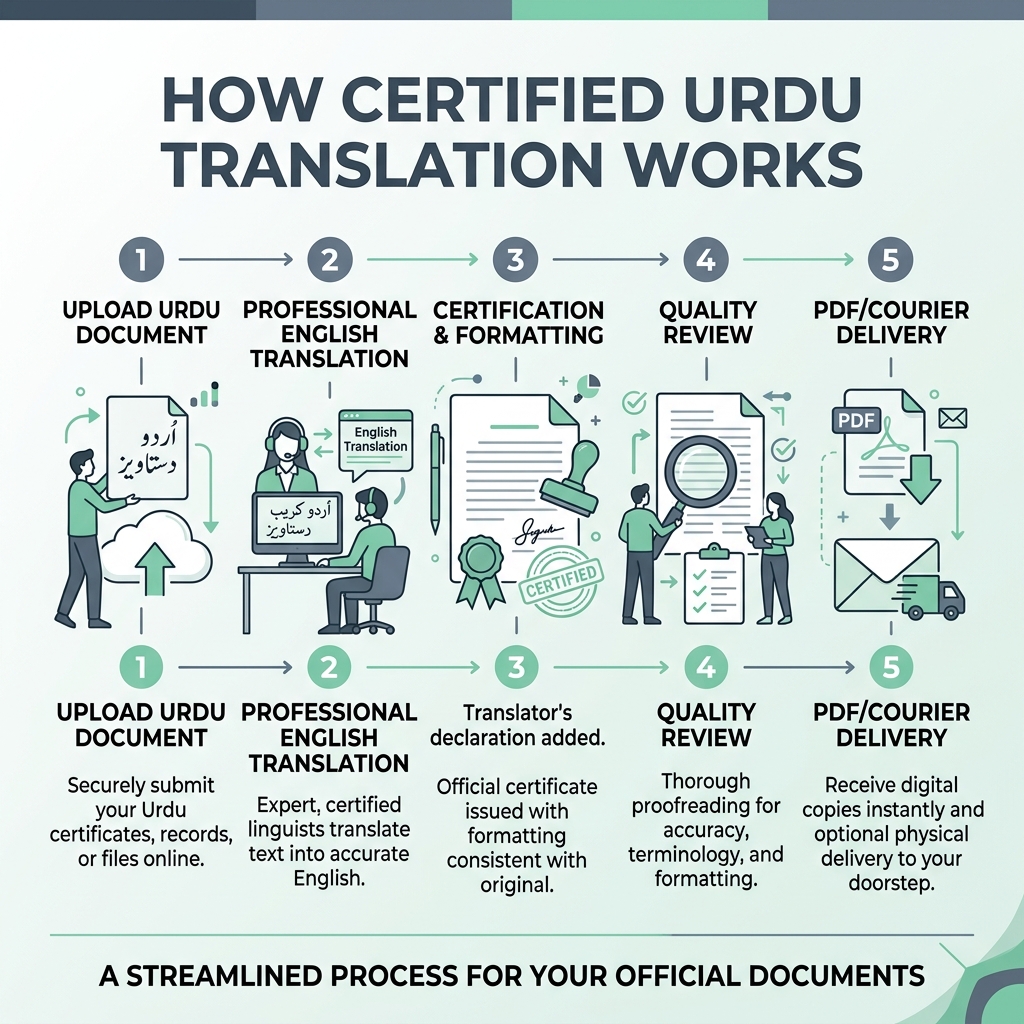
Certified Human Translators
We provide:
- High-precision human translation
- Advanced legal terminology compliance
- Exact layout and formatting preservation
- Official Certificate of Accuracy with signatures and stamps
- Double-proofread verification checks
WhatsApp Document Submission
You do not need to visit an office. You can submit clear photos or scans of your Urdu documents directly online via WhatsApp for instant review and processing.
👉 Chat on WhatsApp with Translation Experts
Nationwide Courier Delivery Across Pakistan
We support clients across all cities with door-to-door physical document delivery, including:
- Lahore
- Islamabad & Rawalpindi
- Karachi
- Faisalabad
- Multan
- Peshawar
- Sialkot
- and all other towns and cities nationwide.
Fast Turnaround Support
Facing an urgent embassy interview? We provide express same-day digital translation and next-day courier delivery to ensure you never miss a deadline.
Final Thoughts
Urdu to English translation services in Pakistan are no longer just about converting language. They are about compliance, accuracy, acceptance, and trust.
Most users searching for Urdu translation services are dealing with high-stress situations: visa deadlines, immigration pressure, university admissions, or legal disputes. A single translation error can create severe complications.
At Lisan.pk, we focus strictly on providing certified, professionally formatted, human-reviewed Urdu to English translations for official use with the convenience of WhatsApp submission and tracked nationwide delivery.
About the Author
The Lisan.pk Editorial Team specializes in certified Arabic, Urdu, immigration, legal, and embassy-focused document translation workflows in Pakistan. With decades of experience navigating visa, scholarship, and official registration portals, the team creates practical guides that help users avoid rejections and translation delays.
External Resources & Authority References
- UKVI Translation Requirements Guide
- University of Westminster Translation Guidelines
- The Guardian Translation Industry Report
- Le Monde AI & Translation Analysis
Internal Guides & Quick Links
Need Expert Help with Your Documents?
Our Saudi scholarship consultants are ready to assist you with certified translations and attestation requirements. Get a response in minutes.
Written by Lisan.pk Content Team
Expert consultant at Lisan.pk specializing in international document legalization and translation services.
Related Articles
Bachelor Scholarship Applications 2026: Complete Document Requirements Checklist
Are you applying for an undergraduate Saudi scholarship? Learn the exact document checklist, certified Arabic translation rules, and verification steps required before the September 16, 2026 portal opening.
TranslationMaster's Scholarship Documents Guide 2026 – Complete Preparation Checklist
Are you applying for a Master's or PhD scholarship in Saudi Arabia? Learn the complete graduate document checklist, research file formatting, and certified Arabic translation requirements for the 2026 cycle.
TranslationEnglish to Spanish Translation Services in Pakistan: Your Complete Guide to Certified Approval
Get expert English to Spanish translation services in Pakistan. Fast, embassy-approved certified translations in Lahore, Karachi, Islamabad, & more.